




Rio Tinto has begun commissioning its US$1.5 billion AP60 smelter expansion in Quebec, increasing low-carbon aluminium capacity while reinforcing North America’s critical minerals and metals supply chain. For the mining sector, the project highlights how innovation, decarbonisation and operational competitiveness are becoming increasingly interconnected.
Rio Tinto brings next-generation smelting technology online in Quebec
Rio Tinto has started commissioning its US$1.5 billion AP60 smelter expansion at Complexe Arvida in Quebec, marking a significant milestone in the deployment of its commercial-scale low-carbon aluminium technology.
The start-up process began in March and is expected to conclude by the end of 2026, when all 96 new pots are operational. Once fully commissioned, the expansion will add approximately 160,000 metric tonnes of annual primary aluminium production capacity, bringing total output produced using AP60 technology to around 220,000 metric tonnes per year.
The investment underscores growing momentum behind projects that can simultaneously strengthen domestic supply chains, improve environmental performance and enhance long-term competitiveness.
Expanding production while modernising operations
The AP60 expansion, combined with Rio Tinto’s planned aluminium recycling centre at Arvida, is expected to more than offset production losses associated with the closure of the older Arvida potrooms, which is scheduled to be completed in June.
The project has also delivered significant economic benefits to the region.
At peak construction, more than 1,500 jobs were created, while the development generated more than $1 billion in economic benefits for Quebec through spending with contractors and suppliers. Once operational, the expansion will directly support approximately 100 permanent jobs and help sustain employment throughout the broader supply chain.
Representing the latest chapter in Rio Tinto’s century-long presence in Quebec, the expansion strengthens its ability to supply North American customers with low-carbon aluminium used across transportation, construction, electrical applications and consumer goods.
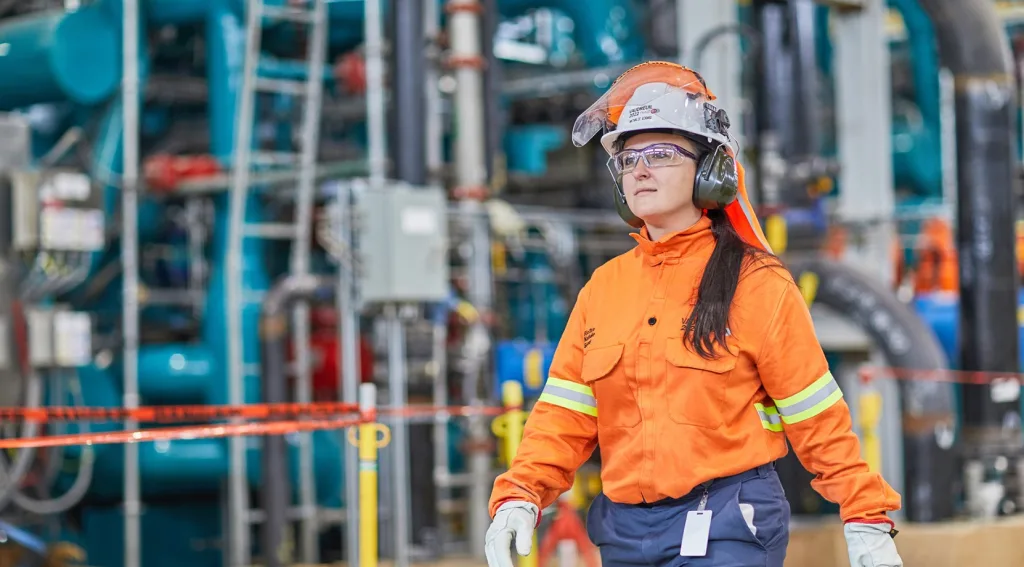
AP60 technology advances low-carbon metals production
Developed by Rio Tinto’s research and development teams, AP60 is among the most efficient and lowest-carbon aluminium smelting technologies currently operating at commercial scale.
Powered by hydroelectricity, Rio Tinto says the technology produces one-sixth of the greenhouse gas emissions associated with the global industry average and half the emissions generated by the older technology currently used at the adjacent Arvida smelter.
The expansion is also expected to reduce fine particulate matter emissions by up to 90%.
AP60 technology generates approximately 1.6 tonnes of CO2e per tonne of aluminium produced, compared with around 3.2 tonnes of CO2e per tonne produced using Arvida’s existing technology and 10.9 tonnes of CO2e per tonne for the industry average.
Rio Tinto estimates the new expansion will reduce carbon emissions by approximately 290,000 tonnes annually compared with the retired potrooms.
Supporting the transition to carbon-free aluminium
The AP60 project also complements the development of ELYSIS, the carbon-free aluminium smelting technology partnership that includes Rio Tinto.
A demonstration plant is currently being built in Quebec with support from the Government of Canada through the Strategic Innovation Fund and in partnership with the Government of Quebec through Investissement Québec.
The technology aims to eliminate all direct greenhouse gas emissions from aluminium smelting while producing oxygen as its only direct by-product.
The AP60 expansion and ELYSIS initiative demonstrate how established mining companies are balancing near-term emissions reductions with longer-term breakthrough technologies.
Mining leaders highlight competitiveness and innovation
Rio Tinto Aluminium & Lithium Chief Executive Jérôme Pécresse said the commissioning demonstrates both the strength of Quebec’s aluminium sector and Rio Tinto’s ability to deliver advanced technologies at scale.
“For 100 years, Quebec has been at the heart of the aluminium industry, and with AP60, Rio Tinto is now strongly positioned for decades to come with one of the most advanced smelting technologies operating at commercial scale. This milestone brings into production the first major primary aluminium project in the West in more than a decade and demonstrates Rio Tinto’s ability to deliver world-class, low-carbon technologies.”
“The newly expanded AP60 smelter reinforces our competitiveness and the offer for our customers position in North America increases the efficiency of our Quebec operations and reduces our carbon emissions by approximately 290,000 tonnes per year compared to the old Arvida smelter. Together with the construction of our ELYSIS® demonstration plant in Quebec, using the first licence of this breakthrough technology, Rio Tinto is demonstrating its value as a secure, innovative and reliable supplier of low-carbon aluminium the world needs.”
Government leaders also positioned the investment as strategically important for Canada’s industrial future.
Canada’s Minister of Industry, The Honorable Mélanie Joly, said:
“For 100 years, Rio Tinto has been a cornerstone of Quebec’s industrial strength, creating good jobs and supporting communities across the country. Today, as global competition intensifies, our government is proud to work alongside partners like Rio Tinto to build on that legacy – strengthening our aluminum industry, advancing world leading innovation and ensuring Canadian workers remain at the forefront of a more resilient economy.”
Premier of Quebec Christine Fréchette added:
“Despite the economic uncertainty related to U.S. tariffs, today’s inauguration once again demonstrates that our government and Rio Tinto believe in Quebec’s potential. Today, we are securing the future of Quebec’s aluminium industry by ensuring the modernization and gradual decarbonization of a sector that is vital to our economy. More than ever, Quebec is establishing itself as a global leader in sustainable aluminium and a true technological trailblazer.”
This article was produced by the editorial team at Mining Outlook and published as part of the Outlook Publishing global network of B2B industry magazines.
Outlook Publishing delivers industry insights, company stories, and sector coverage across mining, manufacturing, construction, healthcare, supply chains, food production, and sustainability.
Mining Outlook provides ongoing coverage of organisations and developments shaping the global mining industry.