



Dr Cyril Widdershoven, Senior Advisor for Blue Water Strategy, assesses the valuable role Pakistan could play in meeting a growing international demand for key minerals.
PAKISTAN’S MINERALS MOMENT
Global copper demand is expected to grow by 24 percent to reach 42.7 million tonnes per annum (tpa) by 2035, driven by electrification and digitalisation pressures across the world economy.
This explains why critical minerals have shifted from a specialist topic to a board-level priority.
The International Energy Agency (IEA) expects electricity demand from artificial intelligence (AI)-driven data centres to surge by 2030 and, in turn, demand for energy transition minerals to grow rapidly.
Governments are rewriting industrial policy around access to minerals, whilst investors are hunting for projects that can deliver at scale.
The EU has made this strategic intent explicit through its Critical Raw Materials Act, which aims to secure and diversify supply for key technologies and strategic sectors.
In this environment, the old map of mineral supply looks increasingly fragile. Export controls have become a lever of statecraft.
China has had certain antimony products under export controls since 15th September 2024 – a reminder that supply chains can be constrained quickly when geopolitics hardens.
For investors, this is a risk that shows up in project financing, delivery timelines, and the premium paid for dependable jurisdictions. Pakistan is positioned at a valuable intersection of these forces.
Geographically, it connects the Persian Gulf, Central Asia, and Indian Ocean trading routes.
Diplomatically, it has the ability to work with multiple centres of power, including the US, China, and Europe.
For European and Western investors seeking diversification, this matters, as does the parallel appetite from Gulf and Saudi-based capital, including resource-focused vehicles that are actively scanning for scale projects and strategic partnerships.

DEVELOPING DOWNSTREAM CAPABILITY
Alongside commercial miners, sovereign wealth fund-backed investors and operators are showing sharper interest in long-life copper and gold assets that can meet strict governance and environmental, social, and governance (ESG) expectations.
The opportunity, however, is not simply to extract. The global energy transition rewards countries that can deliver reliability and value beyond just volume.
That means predictable licensing, fiscal stability, and a credible operating environment that supports international standards on transparency, environmentalism, and community impact.
It also means a practical approach to local value creation in terms of skills, services, and processing.
Pakistan has already begun to frame its ambition in these terms. The inaugural Pakistan Minerals Investment Forum held in Islamabad last year captured a clear message from national leadership.
Investment was encouraged, but the overall goal set was for the country to develop downstream capability rather than remain a pure exporter of raw materials.
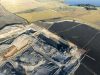
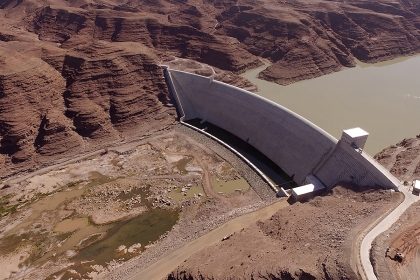
Pakistan’s world-class copper and gold mining project, Reko Diq, is the nation’s natural anchor for this new chapter.
The mine’s majority shareholder, Barrick Mining Corporation (Barrick), updated its feasibility disclosures point to Phase 1 production of around 240,000 tpa of copper on a 100 percent basis, alongside gold output.
Scale is only part of the story – equally important is the quality of the financial coalition now forming around the project.
In August 2025, the Asian Development Bank announced approval of a financing package worth USD$410 million, whilst November saw the US Export-Import Bank approve USD$1.25 billion in financing for Reko Diq.
A MODERNISED FRAMEWORK
It’s important to note how Pakistan’s appeal does not begin and end with one asset.
The country has a track record of international operating partnerships, including the long-running Saindak Copper-Gold Project developed with Chinese participation.
The next phase is to broaden the portfolio and modernise the framework around it – investors want a pipeline, not a single headline.
They want clarity on geology, but also permits, land access, logistics, and dispute resolution, and to see how resource development translates into stable revenues and communities.
This is where the Pakistan Minerals Investment Forum 2026 (PMIF26) becomes strategically timed.
PMIF26 will be held in Islamabad between 8th and 9th April this year and is designed as a deal-oriented platform where international stakeholders can engage the regulatory ecosystem in one place and explore new opportunities.
In a market defined by supply anxiety, it offers a structured opportunity to match Pakistan’s resource base with the capital and technical partners needed to turn reserves into dependable supply.
THE NEXT CHAPTER
There are also nearer-term minerals that can help Pakistan build credibility quickly.
Antimony has moved from the margins into focus as export controls reshape trade flows.
Pakistan has been drawing attention from US-linked buyers despite relatively modest current output, which underlines how quickly strategic interest can shift when markets tighten.
For European and Western investors, the proposition is straightforward.
Pakistan offers scale in flagship projects, a widening exploration story, and a geography that naturally links multiple demand centres.
The task now is execution – predictable governance unlocks capital, bankable projects unlock capability, and capability unlocks value.
The energy transition is accelerating, supply chains are fragmenting, and the world is looking for new, trusted sources.
Pakistan can step into that role. The next chapter should focus on delivery.