




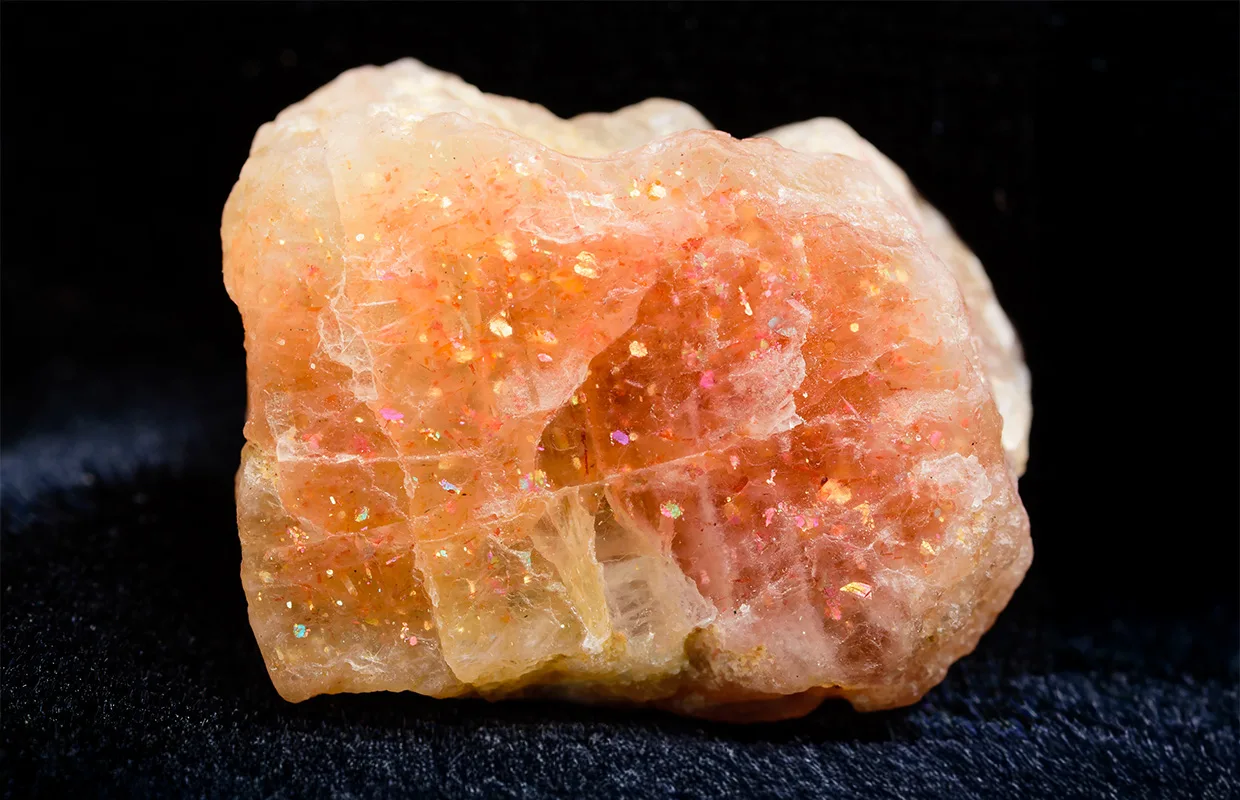
We unveil the optical phenomenon of the luminous sunstone, which merges ancient roots with a contemporary charm. This precious gem possesses a cultural and spiritual significance as its radiance inspires and uplifts all who bask in its brilliance, showcasing a sparkly, speckled solar flare.
SIZZLING SUNSTONE
Feldspar is a fascinating mineral that occurs in various forms, including plagioclase. It crystallises from magma and is abundant in igneous, metamorphic, and sedimentary rocks.
The geological processes that shape this material unfold over millions of years, influenced by myriad conditions. Its story begins deep within the Earth’s crust, where magma ascends, driven by intense heat and pressure.
As this molten rock eventually breaches the surface, it cools and solidifies, giving birth to a remarkable formation. Its complex chemical composition is a sodium-calcium-aluminium silicate, making it a significant component of the lithosphere. When viewed from certain angles, feldspar displays a captivating, spangled appearance, adding a unique character to its otherwise solid form.
One of the most striking varieties of feldspar is sunstone, a member of the aluminium tectosilicate mineral group, celebrated for its vibrant colour spectrum. Indeed, the gem can be found in shades ranging from a warm golden yellow and soft peach to vivid orange, deep fiery red, and even rich coppery tones.
However, its intricate geological journey contributes to the distinctive quality that sets it apart – rare, highly coveted, thin, plate-like inclusions that catch the luminosity, creating a mesmerising, glimmering effect that enhances its allure and desirability.
The gem’s remarkable aventurescence – a dazzling, glittery, or metallic glint – is enchanting, created by tiny amounts of copper and iron oxides, such as hematite or goethite, which reflect light and bring the stone to life, giving it an almost ethereal beauty.
This reflective quality, known as the Schiller effect, occurs when light interacts with microscopic layers or inclusions within the stone, creating a sheen that appears to float beneath its surface. Transparent to translucent sunstones exhibit a lively, sun-like sparkle, showcasing a shimmering play of colours that resembles sunlight dancing on their surface.
A RADIENT JOURNEY THROUGH TIME
This stunning mineral is not just a geological marvel; it embodies an intriguing history intertwined with ancient cultures that revered its distinctive qualities.
Throughout time, the sunstone has inspired many captivating tales regarding its origins and uses, particularly within the rich tapestry of Greek, Egyptian, and Nordic mythology, as well as within various Native American cultural narratives.
Commonly known as heliolite – a term derived from the Greek words helios, meaning sun, and lithos, meaning stone – this enchanting gem captures and radiates the warmth and brilliance of sunlight.
In Ancient Greece, the sunstone was held in high esteem, believed to embody the essence of Helios, the sun god, known as Sol in Ancient Rome. The Greeks cherished a fascinating legend that claimed the gem descended from the celestial sphere during a solar eclipse, presenting itself as a precious gift from the heavens.
Conversely, the Ancient Egyptians viewed the sunstone as a sacred emblem of their powerful sun god, Ra. They believed this mesmerising gem could invigorate the physical body, imbuing it with energy and vitality, much like the sun’s life-giving rays. This jewel held deep significance, symbolising not only illumination but also the sun’s strength and warmth, connecting its bearers to the divine.
The Nordic Vikings, skilled seafarers of their time, utilised sunstones as navigation tools on their adventurous journeys across vast, unpredictable seas. By holding these luminous gems up to the light, they could discern the solar position, relying on the incandescent shimmer that the stones emitted to guide them through treacherous waters.
In contrast, Native Americans attributed a profound significance to the sunstones, believing in their extraordinary healing abilities. They employed gems in various medicinal practices, with a legend emerging about a valiant warrior, where, after suffering a grievous injury, his blood dripped onto the sunstones, infusing them with his spirit and turning them a deep shade of red.
This mystical connection was thought to empower the stones, enhancing their restorative properties and making them powerful tools for healing.
MINING MAP
Sunstones are found worldwide, with deposits in countries such as the US, Canada, Mexico, Norway, Russia, India, Sri Lanka, and China. Each region offers quirky variations in colour and aspectual characteristics, illuminating the gem’s remarkable versatility.
In the US, Oregon sunstone stands out for its origin in eastern Lake County, near the unincorporated rural community of Plush, which has a population of only 38. This distinctive variety is notable for its elemental copper, which can crystallise in unusually large formations within the stones.
Furthermore, the presence of copper influences the colouration of sunstones, creating a spectrum of hues that shifts as the gems catch the light, yielding deeper copper tones that lead to a darker, more intense palette.
Elsewhere, Tvedestrand in Norway is renowned for its breathtaking sunstones, which exhibit a shimmering, spangled appearance. This exceptional visual effect arises from the embedded quartz veins that traverse gneiss, a metamorphic rock characterised by its banded or foliated texture and typically coarse-grained. The interplay of minerals creates a beckoning allure, drawing admirers to these Norwegian treasures.
In Siberia, Lake Baikal is famed for producing sunstones that showcase an extraordinary aventurescence, captivating onlookers with their twinkling brilliance reminiscent of sunlight dancing on still water.
The process of mining sunstones is intricate and labour-intensive, beginning with identifying potential deposits. These gems are typically located within basalt flows or in weathered volcanic rock, and the sites must be sufficiently expansive to support mining operations.
Miners employ traditional methods, utilising pick-and-shovel techniques or short adits – small underground passages providing access to the mining zones. Working as cohesive teams, they skilfully extract rough sunstone, wielding chisels and club hammers to break away the encasing rock.
Once extracted, the raw sunstone undergoes meticulous processing to eliminate impurities. Techniques may include washing and drying, with some gems undergoing heat treatment to enhance their effervescent tint and overall appearance.
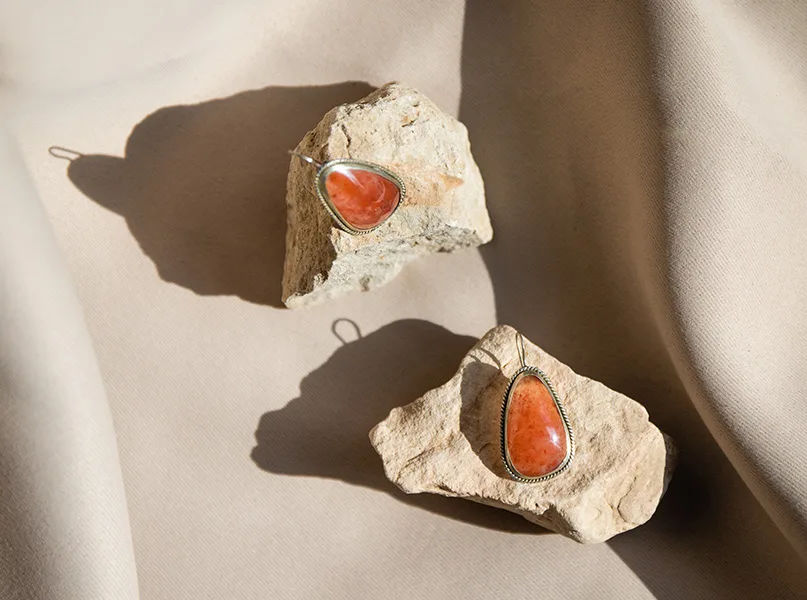
Finally, artisans transform the processed sunstone into polished cabochons, elegant beads, or intricate sculptures, making it a popular choice in contemporary jewellery design.
The sunstones, especially treasured in regions where they are mined, epitomise a harmonious blend of natural beauty and skilled craftsmanship. The journey from their raw form to exquisite gem demands not only physical labour but also teamwork and meticulous care to preserve the stones’ safety and quality, ensuring each piece reflects the idiosyncratic artistry of nature.
WORSHIPPING SUN SYMBOLISM
These remarkable sunstones have captured the attention of many and are becoming increasingly prominent in contemporary lifestyles.
Their striking, vibrant hues, ranging from warm oranges to deep reds and subtle golds, create a striking allure that often leads enthusiasts to explore their potential metaphysical properties. Many believe they enrich the lives of those who cherish them, imbuing a sense of vitality and joy.
The benefits attributed to sunstones are diverse and intriguing, as they are thought to foster self-esteem and inspire creativity, serving as a source of motivation for individuals seeking to enhance their overall well-being.
Additionally, sunstones are often recommended for their supposed ability to boost the metabolism and alleviate the symptoms of seasonal affective disorder (SAD), offering a glimmer of hope during the dreary winter months.
Symbolically, sunstones represent life and joy, resonating particularly with the energy of the solar plexus and sacral chakras. This connection is believed to promote qualities such as leadership, optimism, and emotional balance, whilst also attracting abundance, good fortune, and financial success.
Crystal enthusiasts frequently incorporate sunstones into their meditation practices and goal-setting endeavours, as the gem is reputed to amplify motivation, reduce stress levels, and foster a profound sense of empowerment.
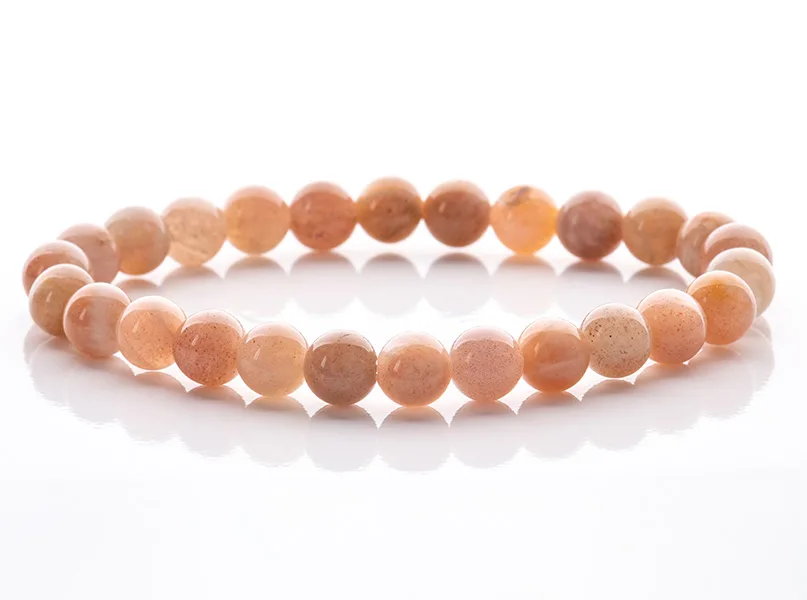
The radiant warmth of sunstones, in both their hues and energy, enhances not just individual practices but also the spaces around them. Beyond their metaphysical associations, sunstones’ striking physical attributes make them a favoured choice for jewellery design, particularly during the Renaissance.
Resulting in an array of stunning pieces, from bold statement pendants and elegant bracelets to more understated earrings and rings, the unique interplay of texture and colour piques the interest of wire-wrapping artists and other crafters who aim to display the stone’s intrinsic beauty.
Historically, sunstones have held significant importance in art and jewellery, cherished for their extraordinary qualities and dynamic appearance. Today, they remain highly sought after, endearing them to many and serving as a timeless symbol of inspiration.
This article was produced by the editorial team at Mining Outlook and published as part of the Outlook Publishing global network of B2B industry magazines.
Outlook Publishing delivers industry insights, company stories, and sector coverage across mining, manufacturing, construction, healthcare, supply chains, food production, and sustainability.
Mining Outlook provides ongoing coverage of organisations and developments shaping the global mining industry.