




Founded in 2025, Hades Mining is building the world’s first vertically integrated, technology-driven extraction company. Dr Max Werner, CEO and Founder, details its proprietary drilling technology, which is designed to fundamentally change drilling economics.
Q&A WITH DR MAX WERNER, CEO AND FOUNDER, HADES MINING
Firstly, how is Hades Mining disrupting the market with true innovation?
Dr Max Werner, CEO and Founder (MW): Our core innovation is a proprietary high-power laser drilling system — but we made a deliberate decision very early on not to be a drilling vendor. We’re not selling metres; we’re producing tonnes of critical minerals and, in time, baseload geothermal heat.
The disruption is structural, not just technical. Mining, oil and gas, and geothermal are dominated by large conglomerates running on technology that is essentially 40 years old.
They are not technology companies – they assess technology risk incorrectly and, as a result, are too slow to adopt modern systems.
We close that gap by owning the full project lifecycle – licence, drilling, in-situ recovery, and offtake – which lets us introduce a step-change technology far earlier in the project cycle than incumbents ever could.
The market context makes this urgent: Europe produces less than three percent of the critical minerals it consumes and imports more than 90 percent of them.
That is not a sustainable position for a continent that wants to lead the energy transition, secure its defence base, and remain industrially sovereign.
Since our founding in summer 2025, we’ve raised over €20 million from leading venture capitalist HV Capital, and Headline, Project A, and Visionaries Tomorrow are doubling down.
We are using that capital to develop our laser drilling technology towards field deployment, kickstarting our first projects, and expanding the Munich team towards 30+ by year-end.
“Our core innovation is a proprietary high-power laser drilling system — but we made a deliberate decision very early on not to be a drilling vendor. We’re not selling metres; we’re producing tonnes of critical minerals and, in time, baseload geothermal heat”
Dr Max Werner, CEO and Founder, Hades Mining
Hades Mining recently unveiled its proprietary ‘superheated’ drilling technology for deep geothermal and critical mineral extraction. Can you tell us more?
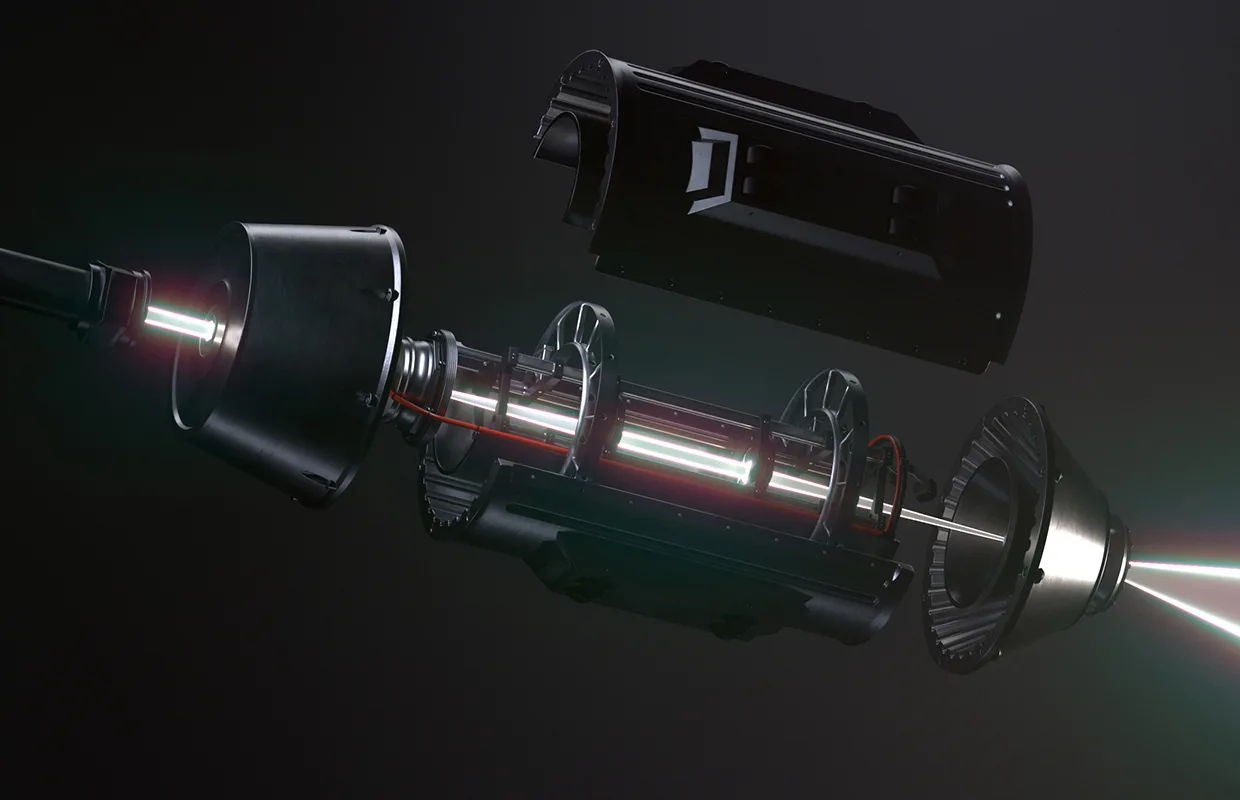
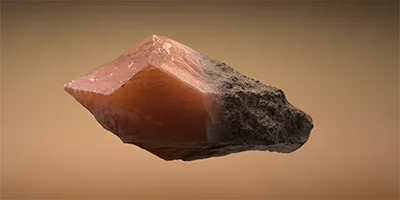
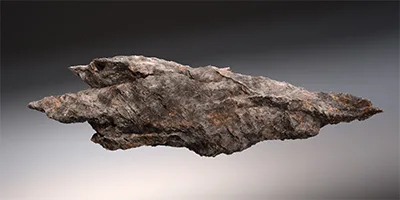
MW: The system is a non-contact, fibre laser-based drilling platform. Instead of grinding rock with a mechanical bit, we deliver a high-power, continuous-wave laser to the bit face, superheat the rock, then use a high-pressure gas purging system to fracture and clear the material in milliseconds.
In our lab, this has produced sustained penetration rates of 30 to 50 meters per hour in granite – orders of magnitude faster than conventional methods in hard rock – at the current 21-centimetre borehole diameter.
The technological breakthrough that makes this scalable today was not available a decade ago; 200-kilowatt industrial fibre lasers are now commercially available and economically viable.
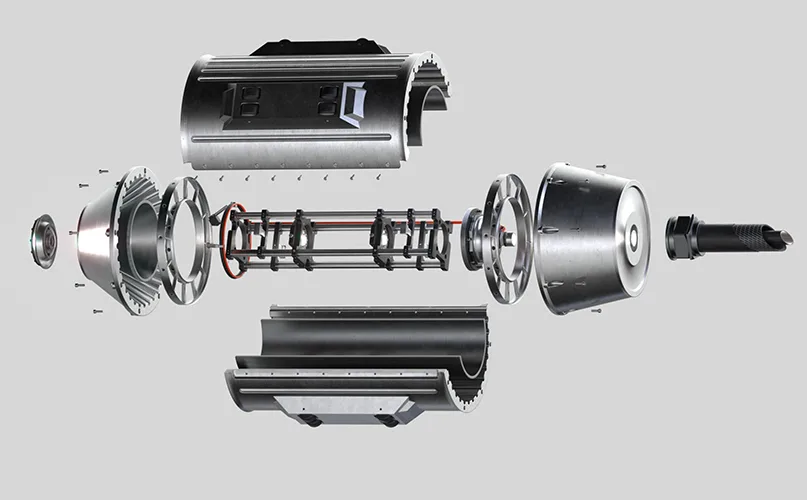
The downhole assembly itself is radically simplified; only two specialised lenses sit at the drill tip. Everything else is robust, replaceable, industrial-grade hardware – that simplicity is what makes the system suitable for kilometres (km) of depth.
It’s also a sensing system, not just a drilling system. Our laser system doubles as a spectroscopic probe – by analysing the vapour it produces, we get continuous compositional data on the rock we’re drilling through.
That gives us more information than a conventional bit ever could, and it’s the kind of data feedback loop that mining has historically lacked.
How is the technology designed to fundamentally change drilling economics?
MW: Drilling is the single-largest cost driver in the projects we care about: roughly 30 to 60 percent of capital expenditure is in-situ recovery mining, and 50 to 70 percent is in deep geothermal.
If you fundamentally change the cost and speed of drilling, you change the overall economic equation of the entire project.
Our system attacks multiple cost drivers simultaneously: speed (penetration rates that don’t degrade with depth); wear (no mechanical contact, so no bit replacement cycles and less downtime); depth (purpose-built for 4+ km, where the cost-per-metre advantage compounds most steeply); and information density (real-time spectroscopy reduces the need for separate exploration campaigns).
Where conventional bits lose efficiency under pressure and temperature, our penetration rate stays consistent from surface to target depth. That’s the difference between a project that stops being economic at 3 km and one that remains viable at 5 km.
We are not chasing incremental improvement – we are targeting an order-of-magnitude shift to make previously stranded deposits and reservoirs bankable.
What direct impact does improved drilling performance have on the economic viability of critical mineral and energy projects?
MW: The honest answer is that drilling cost is what currently determines whether a deposit gets developed at all.
There are many medium-to-large hard-rock deposits across Europe covering a breadth of critical raw materials – most of them sit dormant not because the resource isn’t there, but because conventional drilling, and the social and environmental considerations around it, make them uneconomic. We aim to change this.
A faster, cheaper, more efficient, and deeper drill widens the bankable resource base in three concrete ways. It pulls previously sub-economic grades into the money, makes deeper deposits accessible without proportionally larger capital commitments, and shortens the timeline from concept to first production, which is decisive for investors.
For geothermal, the math is even sharper. Most projects today stop at 3 to 4 km because the cost curve goes negative beyond that point. If drilling cost at depth drops by even a multiple, the addressable footprint of geothermal – and therefore the heat available to industry and municipalities – expands dramatically.
It also derisks projects in dimensions that investors and regulators care about. Non-contact drilling means minimal vibration, which lowers fault line and microseismicity risk and could ultimately allow drilling closer to populated areas – meaningful for both geothermal heat networks and community acceptance of mining.
Why does Europe’s mining sector – especially young, emerging project developers – need a new kickstart?
MW: For decades, Europe has had neither the capital nor the political will to develop its subsurface resources.
The result is an industry where the people, the supply chains, and the institutional knowledge have eroded – at exactly the moment a multi-polar world order is rewriting the rules around access to raw materials.
The geopolitical context is the most important factor of our generation. The post-war system increasingly does not run on dollar-denominated trade alone; it runs on access to raw minerals and energy.
Europe enters that conversation with less than three percent domestic critical mineral production. That makes us extraordinarily vulnerable in negotiations on every other topic.
Emerging European project developers are the ones with the best deposits – often inherited from historical exploration – but they are being held back by a stack of legacy bottlenecks: drilling costs that price them out, environmental, social, and governance (ESG) and permitting frameworks designed for a 1980s industry, capital markets that still see European mining as too slow and too risky, and an offtake landscape dominated by non-European processors.
How will opening up the technology to European project developers help accelerate projects from early-stage concepts into bankable and executable developments?
MW: This is the heart of why we’re now building out our dedicated Partner Programme — to develop projects together with European project developers, not in isolation from them.
The logic is straightforward: our technology stack only realises its full impact when combined with deposits, licences, and local geological knowledge that already exist across Europe.
A project developer with a strong asset but a stalled drilling economics case is exactly the partner we want to work with. We bring the system, team, and integrated process know-how; they bring the asset, local relationships, and often the regulatory groundwork.
Concretely, the Partner Programme is built around joint project development – co-investing time, capital, and technology into specific deposits where our drilling and in-situ recovery capability is the unlock.
We don’t compete with project developers for the same assets; we make assets that no one else can access or finance into bankable projects.
We are explicitly not chasing the famous, contested deposits where major mining houses are already deploying billions. We’re focused on the projects they don’t want – deposits that become economic only when our technology package is in the stack.
That is precisely the segment where European emerging developers are concentrated.
For the partner, the value proposition is clear: shorter time to first production, drilling costs that move projects from sub-economic to bankable, and access to a downstream offtake network we are building across the European critical mineral value chain – chemistry, refining, and end-use industrial offtakers.
“The model is best summarised as the world’s first technology-enabled, vertically integrated extraction company – combined with a partner-led project pipeline”
Dr Max Werner, CEO and Founder, Hades Mining
Finally, how is Hades Mining creating a new model for how critical mineral and energy projects are unlocked in Europe?
MW: The model is best summarised as the world’s first technology-enabled, vertically integrated extraction company – combined with a partner-led project pipeline. That combination doesn’t currently exist in our industry, and we believe it’s the structure Europe and the world needs.
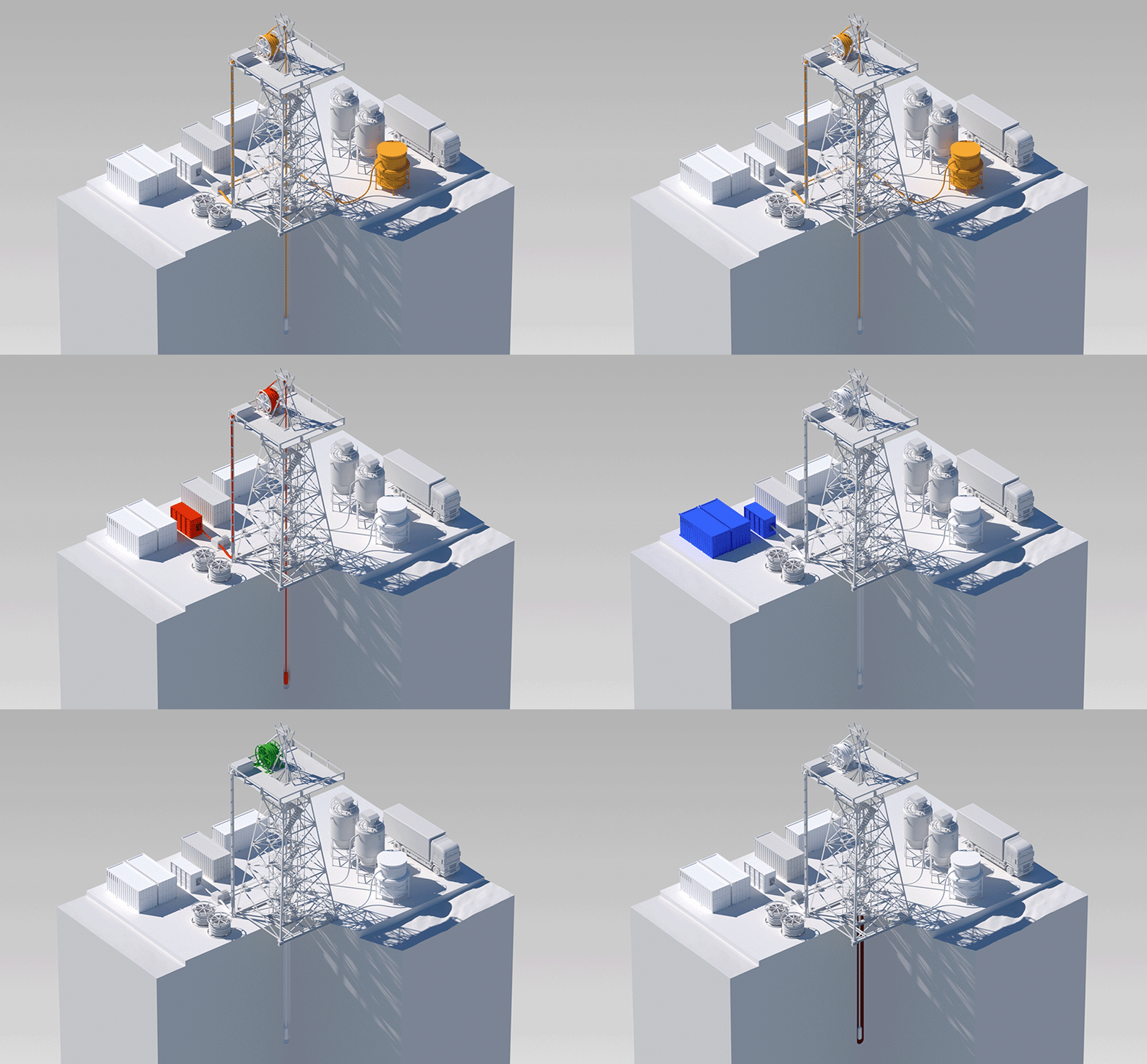
Vertical integration is what allows us to introduce a step-change technology earlier in the project cycle than any incumbent contractor or major could. We control the licence, drilling, in-situ recovery process, and offtake interface – which means we can absorb and price technology risk that a fee-per-metre contractor never could.
The Partner Programme then layers a second model on top: rather than trying to do every European project alone, we develop projects jointly with the developers, chemistry partners, and offtakers already in the value chain.
Our first rare earth project is structured exactly this way – a major chemistry partner on the leaching side, a refining partner producing pure neodymium oxide, and a major industrial company for downstream offtake; the entire chain is European.
Ultimately, the new model has three commitments. First, we own the outcome – our end product is tonnes of critical minerals and megawatts of geothermal heat, not invoices for drilling services.
Second, we build with European partners across the value chain because resilience requires more than a single company.
Finally, we reset the bar for what bankable looks like. By changing drilling economics at the root, projects that were stranded for 40 years become investable in this decade.
Sovereignty, as we like to say, begins subsurface.
This article was produced by the editorial team at Mining Outlook and published as part of the Outlook Publishing global network of B2B industry magazines.
Outlook Publishing delivers industry insights, company stories, and sector coverage across mining, manufacturing, construction, healthcare, supply chains, food production, and sustainability.
Mining Outlook provides ongoing coverage of organisations and developments shaping the global mining industry.