





With a focus on innovation and efficiency, Atlas Salt Inc. is poised to make significant contributions to the North American salt market. We speak to Nolan Peterson, CEO and Director, to learn more about the company’s endeavors.
NORTH AMERICA’S PREMIER UNDEVELOPED HIGH-GRADE SALT PROJECT
As simple as it may seem, salt plays a crucial role in the everyday lives of people across the globe, boasting a magnitude of uses throughout history.
With its strategic location, innovative design, and sustainable mining practices, Atlas Salt Inc. (Atlas Salt) sits at the heart of the modern salt mining industry, upholding values of environmental stewardship and community engagement.
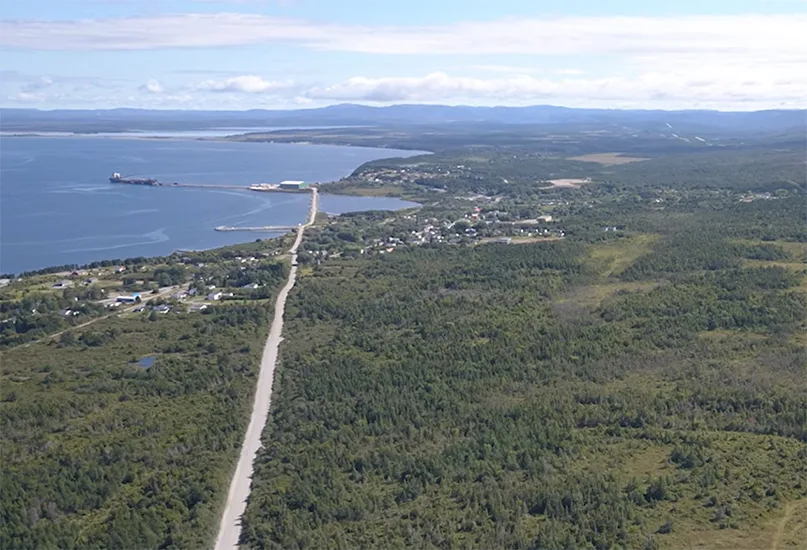
“Atlas Salt is developing the Great Atlantic Salt Project, an undeveloped, shallow, high-grade, homogenous, and thick salt (NaCl) deposit in St. George’s, on the west coast of Newfoundland,” introduces Nolan Peterson, CEO and Director.
The company is targeting initial commercial production in 2030 and full production in 2032, where it will ship four million tons per annum of road de-icing salt destined for major markets in Eastern Canada and the Northeastern US.
Salt mines differ from traditional metal mines in several key respects.
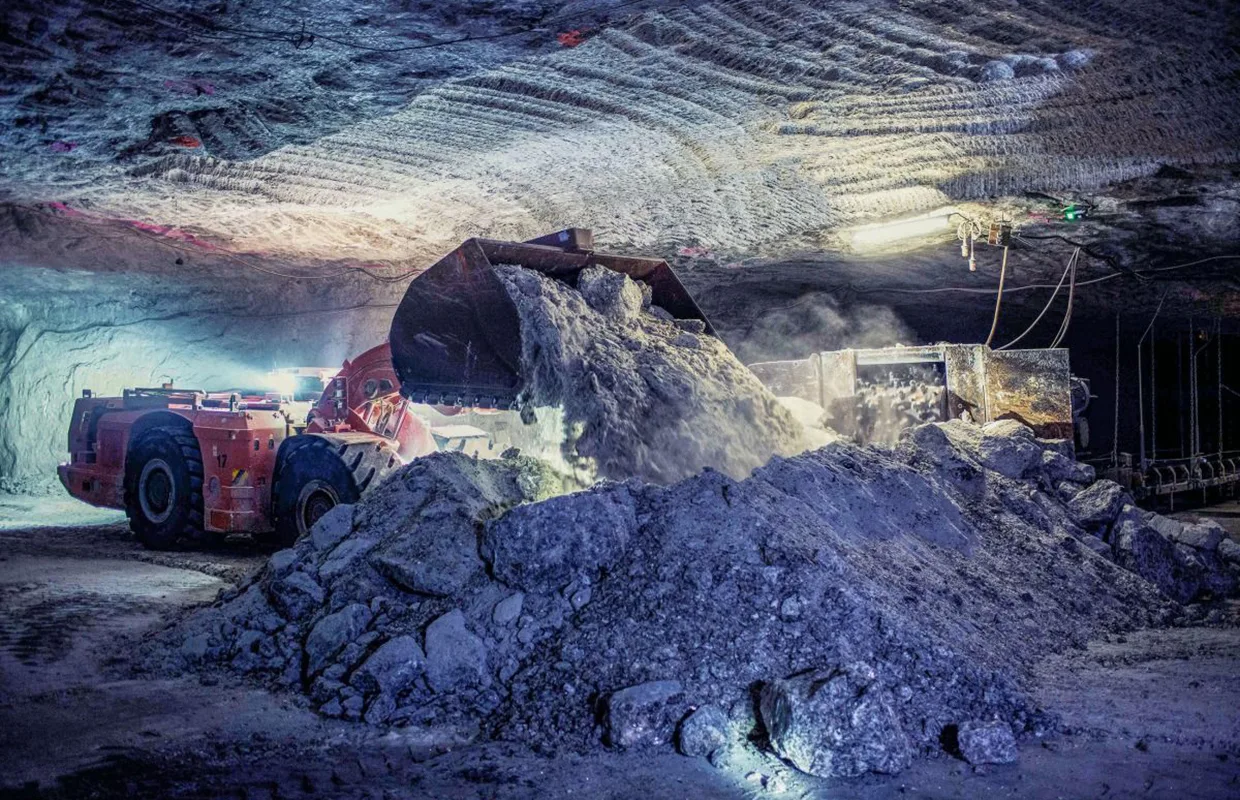
“In underground salt mines, the product is mined using continuous mining equipment and is typically crushed and screened underground and shipped as-is. Metal mines usually require drilling and blasting, crushing and grinding, flotation or chemical leaching, and smelting and refining,” details Peterson.
Additionally, traditional metal mines require processing plants, reagent handling systems, and water treatment plants, whereas salt mining has a lower environmental risk profile without chemical reagents or tailing dams.
“That is one of the main reasons the Great Atlantic Salt Project was released from its environmental assessment in less than two months,” Peterson expands.
Equally, salt mining is comparatively simpler than metal mining. Salt deposits are typically uniform and predictable, while metal deposits are geologically complex and variable. In salt mining, approximately 100 percent of the mined material is sellable, whereas in traditional metal mining, 90+ percent of the mined material becomes waste.
ROAD TO DISCOVERY
Peterson’s background in mining and minerals dates back to childhood. Having grown up in Nunavut in the Canadian Arctic in a small community called Cambridge Bay, he was exposed to mineral development projects looking to get started in the region and the economic benefits they could provide to communities from a young age.
“When I went to school at the University of British Columbia, I chose engineering because of the opportunity to advance these types of projects while working in an interesting field that would take me around the world,” he explains.
In his career, Peterson has had the opportunity to be involved in the construction of multiple major assets at a senior level. He also later acquired an MBA and Chartered Financial Analyst® (CFA®) qualification, giving him a strong financial background that enabled him to transition into the finance and executive management side of the mining industry.
Currently, Peterson finds the mining sector to be particularly exciting.
“Industry and investor sentiment seem to be at an all-time high, unsurprising given today’s commodity prices. My challenge – and opportunity – is educating the market on the fundamentals of the salt industry,” he insights.
“When the prices for other commodities inevitably pull back, salt pricing will likely continue its historical trend, meaning rising at or above the inflation level.”
An interesting observation Peterson noticed when speaking with investors is that many are now overweight in gold and silver and looking to diversify, leading them to seek other minerals they may not have otherwise considered – including salt.
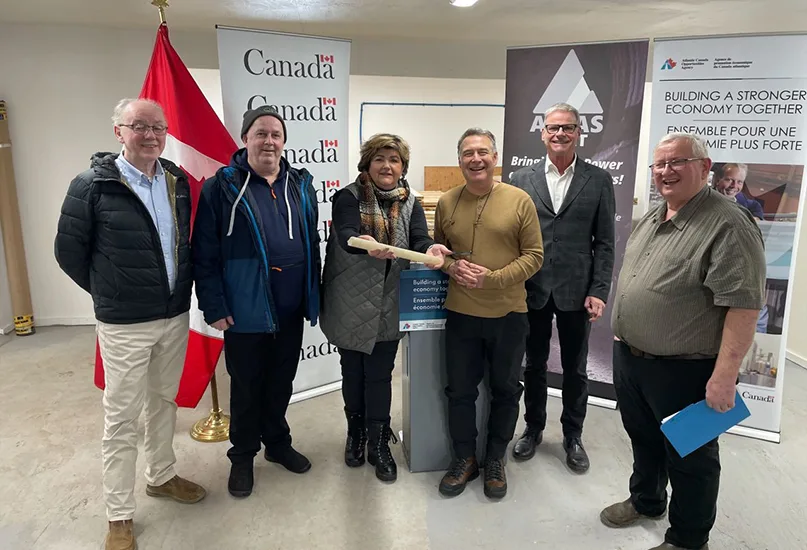
“The Great Atlantic Salt Project represents a once-in-a-lifetime opportunity to contribute meaningfully to the Canadian economy, while adding a significant amount of good-paying jobs for multiple generations of Newfoundlanders and Labradorians”
Nolan Peterson, CEO and Director, Atlas Salt Inc.
ONCE-IN-A-LIFETIME OPPORTUNITY
For Atlas Salt, there are two categories of competitors it differentiates itself from: foreign imports and North American domestic suppliers.
Foreign competitors stem primarily from Egypt and Chile and produce salt at a relatively low cost, but then must bear international shipping rates to bring their product to the North American market, which are rising due to instability in the Middle East.
“Due to our favorable geographic positioning on the coast and relatively low cost of mining, we can be competitive with foreign imports from an all-in cost perspective,” Peterson details.
“More importantly, we can reach major markets in just three days, whereas foreign imports can take two to three weeks.”
With respect to domestic competition, the Great Atlantic Salt Project will deliver salt at a significantly lower cost than any other existing North American salt mine. The project’s deposit is unconventionally shallow, allowing the salt to be mined using conventional drift mining.
Equally, many of the company’s domestic competitors are located inland, or on the Great Lakes system for transportation, which adds additional costs compared with Atlas Salt’s ability to ship directly from its deep-water ocean port access.
Finally, the project is designed efficiently with environmental aspects at the forefront.
“At four million tons per annum, which is roughly 10 percent of the North American market, we are not looking to displace domestic production, and we believe that our production will easily be absorbed into the market,” asserts Peterson.
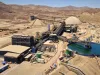
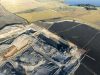
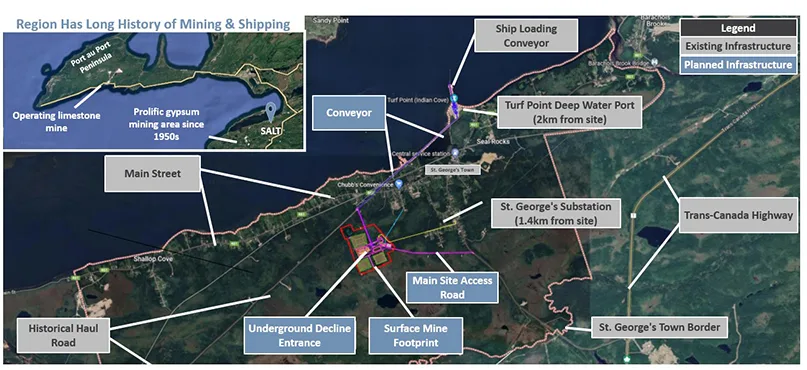
Looking at the Great Atlantic Salt Project more closely, it is located only three kilometers from an existing deep-water port and in close proximity to the Trans Canada Highway, and is well-placed to supply Eastern Canada and the Northeastern US with a stable, low-risk source of de-icing salt.
The project incorporates forward-looking design features aimed at efficiency and cost-effectiveness. Rather than traditional vertical shafts, the mine will use inclined ramp access, enabling easier movement of equipment and salt to the surface. The mine is designed around electric and battery-electric equipment, reducing reliance on diesel and cutting ventilation needs.
Plans also include conveyor systems, from underground crushing through surface handling and to port transfer, streamlining logistics and minimizing environmental impact.
“We believe the Great Atlantic Salt Project will be one of the greenest mining operations in the world,” enthuses Peterson.
One independent study confirms the project will generate the equivalent annual greenhouse gases of just four Newfoundland households, owing largely to electrification and efficient design.
“We believe the Great Atlantic Salt Project will be one of the greenest mining operations in the world”
Nolan Peterson, CEO and Director, Atlas Salt Inc.
A GREEN FUTURE
Environmental stewardship and community engagement are of the utmost importance to Atlas Salt, having been embedded in the company’s foundations since its inception.
These values are central to how it operates and develops the flagship Great Atlantic Salt Project, making both pillars part of its corporate strategy rather than afterthoughts in planning and development.
“In our environmental, social, and governance (ESG) report, we explicitly highlighted environmental stewardship as one of our core sustainability priorities, showing our intent to operate responsibly and sustainably,” Peterson insights.
Atlas Salt sees itself as an active community member, always seeking engagement from the local community, including Indigenous groups. It hosts local meetings and provides presentations and updates aimed at open dialogue to address any concerns before they escalate.
“We support numerous community initiatives and pride ourselves on being one of the largest employers in the region for generations to come,” furthers Peterson.
As the company looks ahead toward future success, it recognizes that 2026 has already been a milestone year, commencing with site preparation activities in February.
Atlas Salt plans to continue its early works efforts throughout the spring and summer, alongside working with Endeavour Financial to focus on securing project financing. The company has had several meetings with interested senior secured lenders during PDAC in Toronto, and is confident it will be in a good position to close on its project finance package by the end of 2026.
“The Great Atlantic Salt Project represents a once-in-a-lifetime opportunity to contribute meaningfully to the Canadian economy, while adding a significant amount of good-paying jobs for multiple generations of Newfoundlanders and Labradorians,” proudly concludes Peterson.
This company profile was produced by the editorial team at Mining Outlook, a publication within the Outlook Publishing global network of B2B industry magazines.
Outlook Publishing showcases organisations and leadership teams shaping sectors including mining, manufacturing, construction, healthcare, supply chains, food production, and sustainability.
Mining Outlook highlights the companies and projects driving progress across the global mining sector.