




The Hon. Stephen Lecce, Ontario Minister of Energy and Mines, describes how the ministry is poised to meet the demands of an evolving energy landscape, outlining its forward-thinking frameworks and unwavering commitment to local socioeconomic development.
Q&A WITH THE HON. STEPHEN LECCE, ONTARIO MINISTER OF ENERGY AND MINES
Firstly, could you introduce us to the Ministry of Energy and Mines and talk us through its mission to develop a safe, reliable, and affordable energy supply across Ontario?
The Hon. Stephen Lecce, Ontario Minister of Energy and Mines (SL): The Ministry of Energy and Mines is charged with a clear mission: to ensure Ontario has the energy and critical minerals needed to fuel economic growth, create well-paid jobs, and deliver a high quality of life for families across the province.
Our core focus is reliability, affordability, and safety – because energy underpins everything from hospitals and schools to manufacturing and mining.
With a dual mandate, we have a clear goal to deliver a dependable, clean, and cost-effective energy system that keeps pace with Ontario’s rapid growth while unlocking the full potential of the province’s mining sector.
As President Trump takes direct aim at Canada’s economy, energy security has become national security, which is why we have taken tangible action to advance critical energy projects such as the development of one of the Western world’s largest nuclear expansions.
This includes proposed new builds at Wesleyville and Bruce County, totaling almost 15,000 megawatts (MW) of new energy generation, and one of the largest transmission build-outs with hundreds of kilometers of new lines planned.
As electricity demand increases due to electrification, population growth, and industrial expansion, we are taking decisive action to plan ahead, investing in energy generation, transmission, and conservation to ensure Ontario remains competitive while keeping costs down for households and businesses.
What is your current take on the energy and mining space in Canada at the moment? Is it exciting to work in?
SL: It is absolutely one of the most exciting and consequential sectors in Canada today. We are at a pivotal moment where energy security, economic growth, and global competitiveness intersect.
Demand for electricity, critical minerals, and responsibly produced resources is growing rapidly, both at home and abroad, and the jurisdictions that act decisively will lead.
Canada, and Ontario in particular, is uniquely positioned. We have a stable regulatory environment, highly skilled workforce, world-class geology, and clean electricity grid.
However, opportunity alone isn’t enough. We are matching potential with action – investing in infrastructure, expanding domestic mineral processing, and ensuring the energy and mining sectors are engines of well-paid jobs and global investment.
This is a space where people can build careers, create value, and strengthen Canada’s role as a trusted, reliable supplier of the resources the world increasingly demands.
It is dynamic, high-stakes, and full of opportunity – and Ontario is leading the way.
How is Ontario at the helm of the nation’s energy and mining landscape with an ambitious energy efficiency effort?
SL: Last year, our government launched Ontario’s Electricity Energy Efficiency Framework as a cornerstone of its long-term energy strategy and one of the boldest investments in energy conservation in Canadian history.
Energy conservation is one of the smartest, most cost-effective resources we have, and Ontario is putting CAD$10.9 billion behind it to expand and enhance energy efficiency programs province-wide.
This fund represents the country’s largest sustained energy investment and is nearly three times the annual average investment of previous frameworks.
Through this long-term strategy, we are delivering programs that help families, businesses, and communities reduce energy consumption and manage peak electricity demand – while lowering the overall costs of the electricity system.
By 2036, the framework is expected to reduce peak electricity demand by up to 3,000 MW and cut electricity consumption by approximately 18 terawatt hours – the equivalent of taking roughly three million homes off the grid.
Over its lifespan, this initiative is projected to deliver CAD$23.1 billion in electricity system benefits and save ratepayers about CAD$12.2 billion by deferring or avoiding the construction of new-generation infrastructure.
This investment supports a suite of modern, customer-focused programs, including rebates of up to 30 percent for home energy-efficiency renovations like windows, insulation, smart thermostats, heat pumps, rooftop solar, and battery storage.
We also recently expanded the program to include rebates for energy-efficiency appliances of up to CAD$200. The framework was also developed to include support for small businesses and institutional energy upgrades through incentives that reduce operating costs and drive economic competitiveness.
Can you tell us more about Ontario’s integrated energy plan and how it will achieve its mission to power the strongest economy in the G7?
SL: In June last year, I was proud to release Ontario’s first-ever integrated energy plan, Energy for Generations – a 25-year roadmap that takes a coordinated, long-term approach to energy planning across electricity, fuels, and conservation.
For the first time, the province is moving beyond siloed decision-making to align planning across all energy sources, ensuring our system remains reliable, affordable, and capable of supporting economic growth for decades to come.
The plan is designed to meet rising demand driven by electrification, advanced manufacturing, and population growth, while keeping Ontario competitive on the global stage.
By investing in new generation technology, modernizing transmission, and supporting innovation, Energy for Generations lays the foundation to power the strongest economy in the G7.
Today’s decisions are about securing an affordable, secure, reliable, and clean energy system that our kids and grandkids can count on and an economy that continues to lead.
How does the Ministry of Energy and Mines support people, jobs, and local business growth?
SL: Everything we do is grounded in supporting the people of Ontario and the communities they call home.
Reliable and affordable energy is a powerful economic driver – it attracts global investment, keeps local businesses competitive, and creates well-paid jobs across the province, particularly in manufacturing, construction, mining, and the skilled trades.
For example, major investments in electricity generation and transmission – including the refurbishment of the province’s nuclear fleet and new infrastructure to support growth in regions like Southwest and Eastern Ontario – are sustaining tens of thousands of skilled jobs while ensuring the industry has the power it needs to grow.
These investments are also critical to supporting the province’s expanding electric vehicle (EV) and advanced manufacturing sectors, which rely on a stable, affordable electricity supply.
In the mining sector, Ontario is strengthening its position as a global leader through responsible development and strategic project advancement. This includes moving forward with critical minerals growth in the Ring of Fire, which holds world-class deposits of nickel, chromite, and other minerals essential to EVs, batteries, and clean technologies.
Central to this effort is our CAD$500 million Critical Minerals Processing Fund, which will help companies build the facilities needed to transform raw minerals into higher-value products right here in Ontario.
Historically, many of our critical minerals have been shipped out of the province – or country – for processing.
Our goal is to end that ‘rip and ship’ approach so minerals mined in Ontario stay in Ontario for refining, processing, and value-added manufacturing.
By expanding domestic processing capacity, we are not only creating more skilled jobs and strengthening made-in-Ontario supply chains but also protecting the province’s workers and economy from the impacts of tariffs and global economic uncertainty.
Processing critical minerals at home improves resilience, supports long-term investment certainty, and ensures Ontario captures the full economic potential of its natural resources.
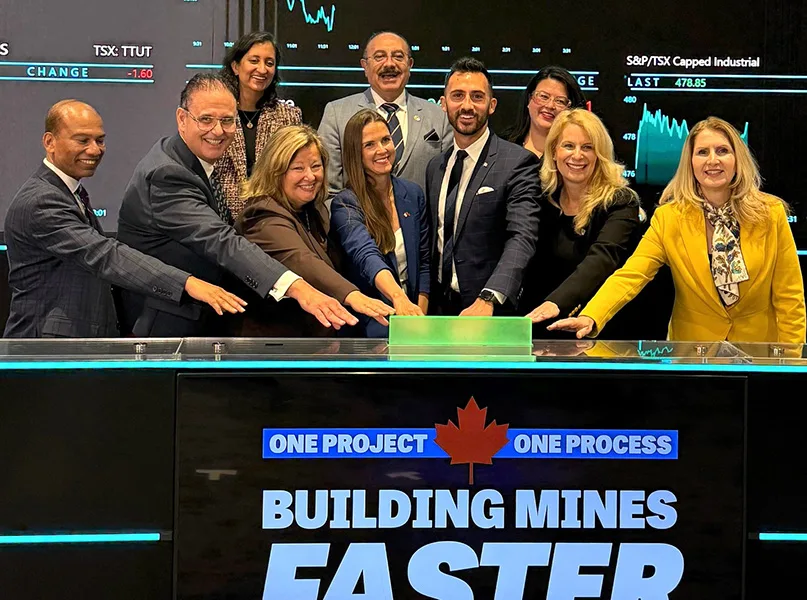
To further support job creation and business growth, our government is accelerating mining project approvals through the One Project, One Process (1P1P) framework, giving proponents clearer, more predictable timelines to bring new mines online with a clear goal of cutting review times by 50 percent.
We moved quickly to pass this legislation in October last year and have already designated two major projects under 1P1P, including Frontier Lithium’s PAK Lithium Project and Canada Nickel’s Crawford Nickel Project – sending a strong signal that Ontario is open for business and ready to compete globally.
By modernizing permitting processes, investing in geoscience, and supporting infrastructure that enables responsible development and processing, we are helping bring projects to market faster while maintaining strong environmental and community standards.
These efforts are building made-in-Ontario supply chains in a vast range of areas – from mining to manufacturing – supporting long-term employment in northern and rural communities, advancing Indigenous partnerships, and ensuring the economic benefits of Ontario’s natural resources remain in the province for generations to come.
In what ways has the Ministry of Energy and Mines considered Indigenous communities when making long-term investment decisions?
SL: Our government has made a dedicated commitment to economic reconciliation and meaningful engagement and partnerships with Indigenous communities. We recognize these communities as rights holders and essential partners in Ontario’s energy and mining future.
The ministry supports Indigenous participation through consultation, capacity building, and opportunities for economic partnership – particularly in energy projects and mining developments.
By supporting Indigenous ownership, training, and long-term economic benefits, we are working to ensure that development is inclusive, respectful, and mutually beneficial.
Our government is also advancing economic reconciliation through the province’s resource revenue sharing, delivering a direct share of mining revenues to First Nations to support critical community infrastructure and long-term economic development.
We continue to work collaboratively with Indigenous partners and remain committed to expanding these agreements as part of our broader approach to advancing reconciliation and shared prosperity.
Finally, looking ahead, what is the ministry’s vision for the future of Ontario’s mining and energy sector?
SL: Our vision is clear: to make Ontario a global leader in clean, reliable energy and responsible mining – driving economic growth, creating well-paid jobs, and keeping energy affordable for families and businesses.
We will get there by planning ahead, investing in critical infrastructure, supporting innovation, delivering Ontario’s integrated energy plan, and responsibly unlocking the province’s vast critical mineral potential. At every step, reliability and affordability guide our decisions, because a growing economy depends on an energy system people can trust.
Ontario has the talent, resources, and ambition to lead. Our role at the ministry is to ensure the energy and mining sectors aren’t just part of the economy – they are its engine, powering opportunity, growth, and prosperity for this generation and the next.